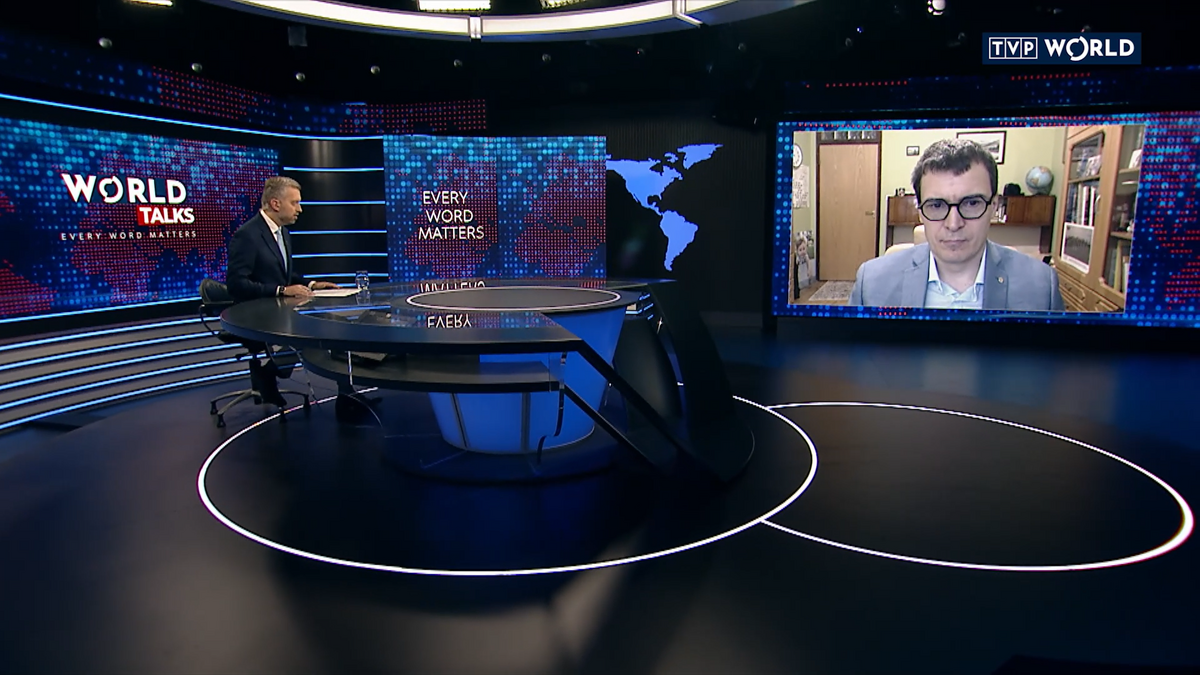
There are growing signs that political unrest is no longer confined to national borders, but forms part of a broader struggle stretching from Europe to the United States. Against this backdrop, questions are being raised about possible foreign interference and Russia's influence online. “Russia does not create conflicts from scratch. It amplifies those that already exist,” Dariusz Jemielniak, Vice President of the Polish Academy of Sciences, told World Talks. But if these divisions already exist, how can societies defend themselves against attempts to deepen them through manipulation? “We need to invest far more resources in detecting and analyzing disinformation,” the expert argues. He also points to education and building social resilience as part of the solution, citing Finland's school system as an example. Another key step, he says, is increasing pressure on social media platforms and holding them more accountable for the content they amplify. Join Sascha Fahrbach and his guest as they discuss Russia's information warfare, and what democratic societies can do to become more resilient against foreign influence campaigns.