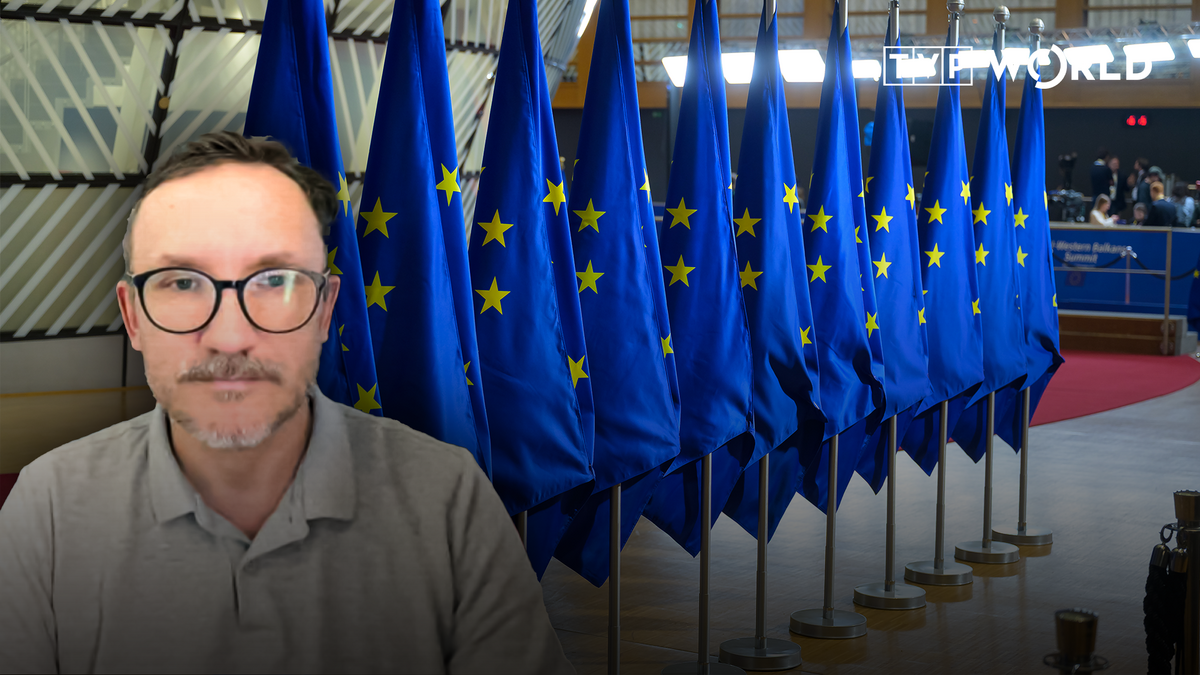
Germany has openly backed the idea of a smaller group of EU countries moving faster on key policy areas, reigniting a long-running debate over whether the European Union is drifting toward a two-speed model. Speaking in Warsaw, German Finance Minister Lars Klingbeil rejected claims that such cooperation would be exclusive. “We won’t be a new institution, no exclusive club. We are six deciding countries that have agreed to speed up together,” he said during a visit to his Polish counterpart. The so-called “E6” grouping — representing roughly 70% of the EU’s population and economic output — is expected to focus on areas such as defense cooperation, capital markets and European sovereignty. Poland’s inclusion has been widely interpreted as a reflection of its growing economic and political weight within the bloc. However, Piotr Kaczyński, a lecturer in EU institutional affairs at the European Institute of Public Administration, cautioned that the initiative’s real challenge lies beyond the six participating states. “The biggest threat is not what those six countries are thinking, but what the other 21 are thinking,” he told TVP World. Kaczyński argued that informal groupings are a familiar feature of EU politics and are typically intended to generate momentum rather than impose outcomes. “The six countries together cannot vote against the other 21 and win any vote,” he said, noting that unanimity or qualified-majority voting rules would still apply. Economic size — rather than growth rates — appears to be a key criterion for participation. Poland’s economy has recently crossed the $1 trillion mark, placing it alongside countries such as the Netherlands and Belgium in terms of overall scale. “This is the qualification — not anything else,” Kaczyński said. Substantive divisions nevertheless remain. Defense spending, capital-markets integration and negotiations over the EU’s next Multiannual Financial Framework continue to expose deep differences — even within the E6 itself. Asked whether the initiative is partly intended as a signal to Washington, Kaczyński instead pointed to Europe’s need for resilience. “Financial markets react very fast,” he said, questioning whether Europe’s key institutions — including the European Central Bank — are sufficiently embedded in the broader discussion. Whether the E6 evolves into a new engine of EU decision-making or remains simply another coordination format remains an open question.